
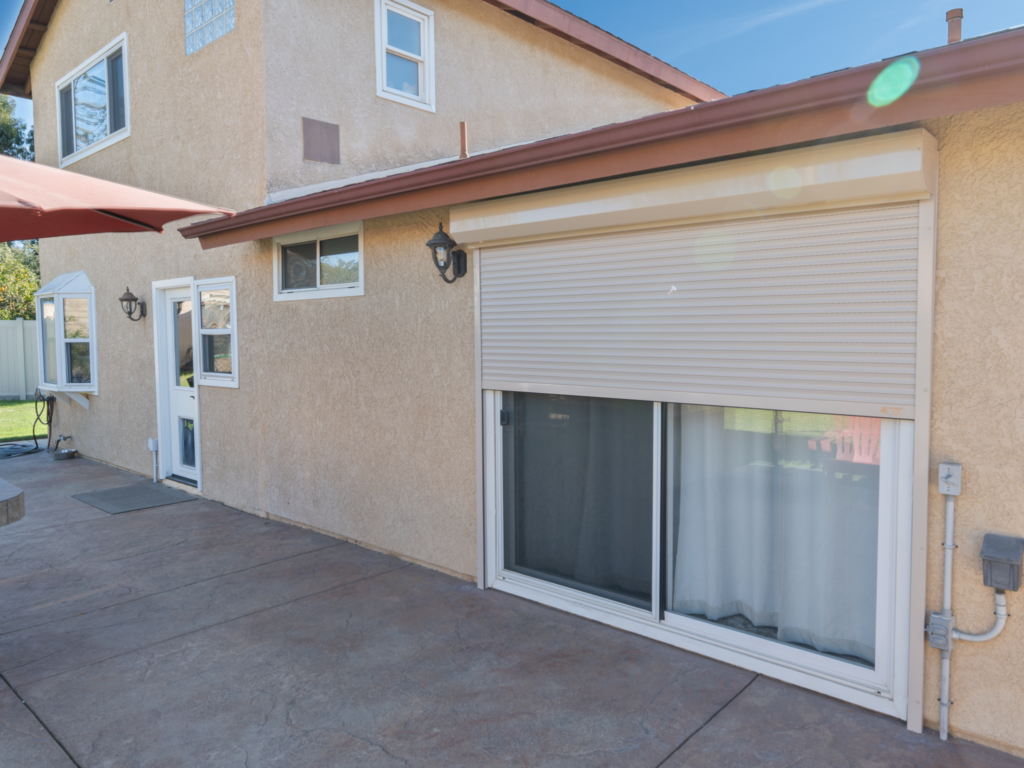
Many homeowners assume rolling shutters are a purely practical feature, picturing the plain, industrial-looking curtains that businesses pull down at closing time. But rolling shutters do come in a wide range of colors and finishes that can beautifully complement your home’s exterior, so you get the security, privacy, and low maintenance of a rolling shutter system without sacrificing curb appeal.
Choosing a Finish: Powder Coating vs. Paint
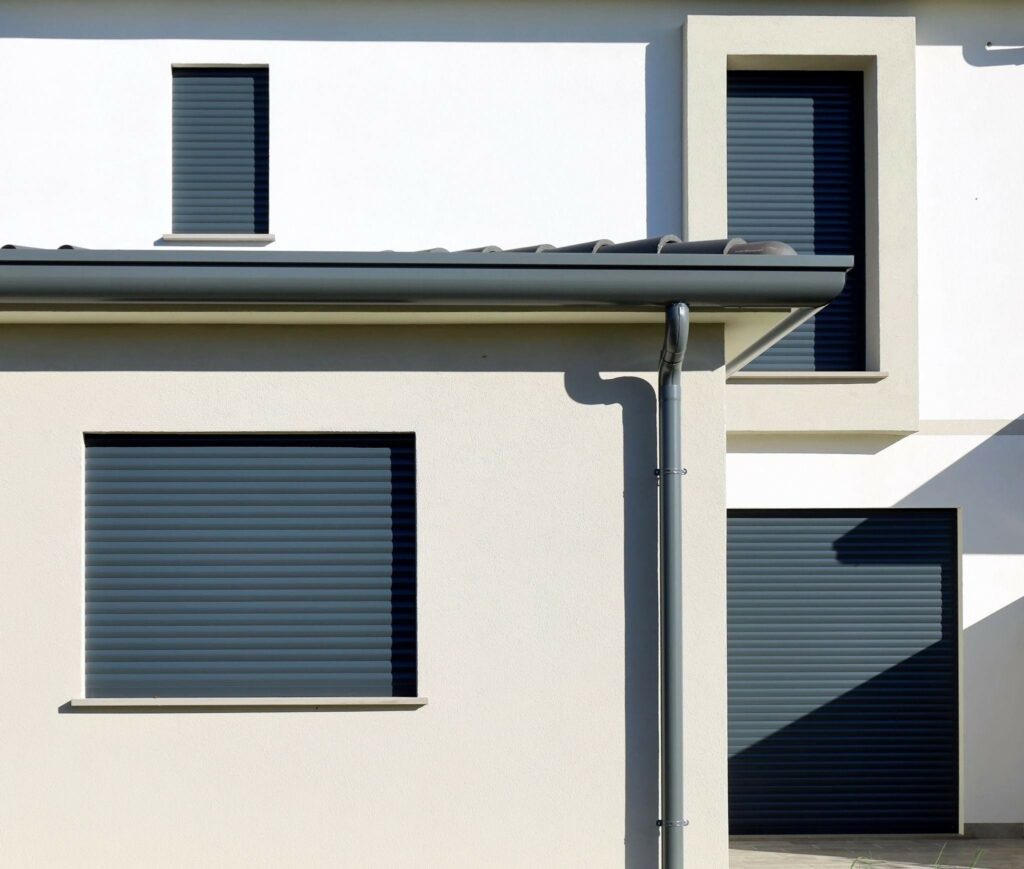
Every rolling shutter starts as bare aluminum or steel, and how that metal is finished influences how the shutter looks and performs over time. Most manufacturers offer two options: powder coating and liquid (wet) paint. At So Cal, we only use powder coats on our rolling shutters, which offers a number of advantages over liquid paint.
Powder coating is a dry, pigmented powder that’s applied to the metal and then cured under high heat, where it melts and fuses into a hard, even shell. Because there’s no solvent to evaporate, the resulting finish is thicker and more uniform than paint, and it resists chipping, fading, and corrosion far better. It’s the standard finish for most quality rolling shutters, and manufacturer warranties on it commonly run anywhere from five years to two or three decades, depending on the exact coating used.
The one tradeoff is commitment: since the color is baked on at the factory, it’s worth choosing carefully, as it isn’t something you’ll be repainting on a whim.
Liquid paint costs less upfront and offers a slightly wider range of custom colors, but painting functional rolling shutters is no easy task; it requires disassembling the shutters (which may void the manufacturer’s warranty) and if done improperly, paint can restrict movement and functionality, leaving you with a faulty product. Additionally, when liquid paint is exposed to sun and weather, it tends to chalk, fade, and peel far sooner than powder coat. This means it will need attention within a matter of years rather than decades.
By contrast, keeping a powdered finish looking sharp doesn’t take much: a twice-yearly wipe-down with mild soap and water, plus a light lubrication of the guide rails and moving parts, prevents dirt and grit from building up and dulling the surface or the color underneath. And you’ll still have that warranty should you need further service.
Choosing Your Colors: Curtain vs. System
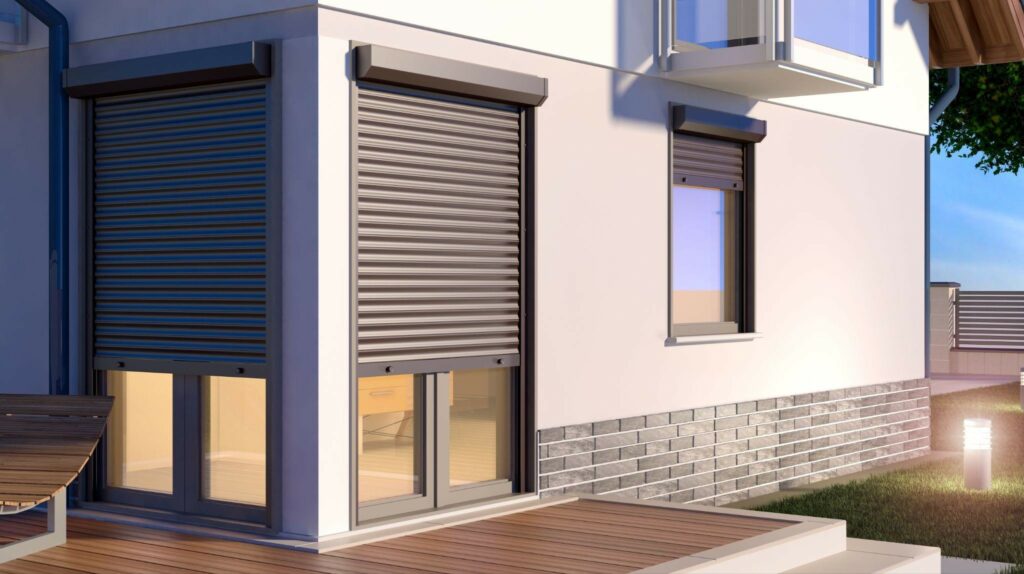
Rolling shutters actually involve two separate color decisions, and it’s worth thinking through both before you order.
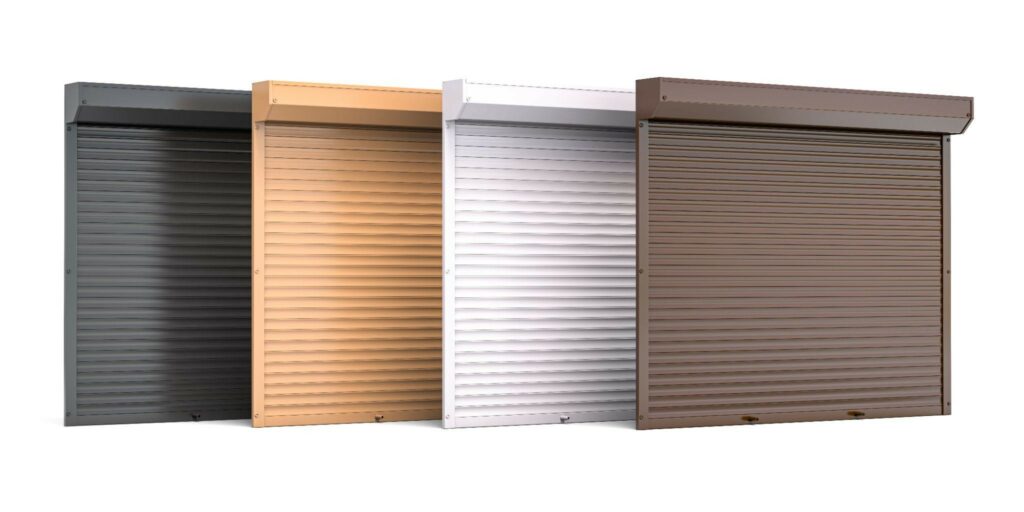
The curtain color is the color of the slats themselves, the part you see whenever the shutter is closed. This is the color that will dominate the look of your window or doorway, so it’s the one to prioritize first. Depending on your system, curtain colors typically include shades like Arcona Beige, Cream, Arizona Cream, Maroon Brown, and Metallic.
The system color covers the guide rails, the housing box, and the base slat, essentially the “frame” around the curtain. You’ll see this color both when the shutter is open and when it’s closed, so it plays a supporting but still important role. Common system colors include Silk White, Texas Cream, Attica Beige, Smoky Grey, and Medium Bronze.
Many homeowners choose a system color that closely matches their curtain color for a cohesive look, though a contrasting frame can also work well as an intentional design choice, especially on modern homes. If you have a specific color in mind that falls outside our standard palette, ask us about custom finish options for your project.
Matching Colors to Your Home’s Style
The right shutter color depends heavily on your home’s architecture. Here are some general guidelines to help narrow things down:
● Mediterranean and Spanish-style stucco homes, which are common throughout Southern California, tend to look best with warm, earthy tones: think Arcona Beige, Maroon Brown, or a warm Medium Bronze. These shades echo traditional terracotta roofing and ironwork, and read as more authentic to the style than a stark black or gray.
● Modern homes generally favor a clean, minimal palette: pair the shutter closely with your window frame color, or go monochromatic with a charcoal, slate, or bronze tone for a sleek, unified look.
● Ranch-style homes tend to work well with a simple two-tone approach, such as a darker curtain color paired with a lighter system color (or vice versa), which helps modernize the home’s horizontal lines without overcomplicating the palette.
● Craftsman-style homes pair naturally with earthy, heritage tones like bronze or a deeper brown, which complement the exposed woodwork and gable details typical of the style.
Of course, personal taste matters just as much as architectural convention, and there’s no rule that says you have to match your home’s original style. If your neighborhood has an HOA or falls within a historic district, it’s also worth double-checking any color restrictions before you order.
Let’s Find Your Perfect Match
Every home, and every homeowner, has different priorities when it comes to color, finish, and function. That’s why we offer in-person consultations: we’ll bring samples, talk through your options, and help you land on a combination that fits your home and your budget.
Get started here and we’ll set up your appointment right away.